After an accident, most drivers know they need to get their car repaired, but they do not always know what happens next. The collision repair process in Newark, NJ can feel confusing, especially if you are dealing with insurance, a claim number, towing, rental car questions, and damage that may not be obvious from the outside.
The good news is that a proper collision repair process follows a clear order. It is not just about making the car look better. It is about inspecting the damage, repairing the structure and body correctly, matching the paint, checking the details, and helping you get back on the road with confidence.
Here is what Newark drivers should expect when bringing a vehicle to Golden Touch Auto Body after an accident.
Step 1: Schedule an Inspection
The first step is getting the vehicle inspected by a qualified auto body shop. Some damage is easy to see, such as a cracked bumper, dented door, damaged fender, or broken headlight. Other damage may be hidden behind panels, under the bumper cover, or near the vehicle’s frame or suspension.
If your car is not safe to drive, towing may be needed. Golden Touch Auto Body can help with towing service and guide you through the next steps.
When you bring your vehicle in, it helps to have:
- Your insurance company name
- Your claim number, if you already have one
- Photos from the accident, if available
- The police report information, if one was filed
- Your contact information
- Any notes about how the vehicle feels when driving
If something feels off while driving, mention it. Pulling, shaking, strange noises, warning lights, or uneven steering can all point to damage that needs a closer look.
Step 2: Damage Assessment and Estimate
Once the vehicle is inspected, the shop prepares an estimate. This estimate lists the visible damage, the parts that may be repaired or replaced, labor, paint work, and any related procedures.
A good estimate is not just a guess. It should explain what needs to be done and why. In New Jersey, you also have the right to choose the repair shop you want. You do not have to automatically use the shop suggested by your insurance company.
Golden Touch works with insurance companies and can help review the repair estimate so the process is easier to understand.
Step 3: Insurance Review
If the repair is going through insurance, the estimate may need to be reviewed by the insurance company or adjuster. The insurance company may write its own estimate first, or the shop may submit its estimate for review.
This is where many drivers get frustrated. Insurance estimates sometimes only include visible damage at first. Once the vehicle is taken apart, the shop may find additional damage. That does not always mean someone made a mistake. It often means the hidden damage was not visible until teardown.
Step 4: Teardown and Hidden Damage Check
Teardown is when damaged parts are removed so the technician can inspect what is behind them. For example, a bumper may look like it only has scratches, but underneath it there may be damage to brackets, reinforcement bars, sensors, absorbers, or nearby panels.
This step matters because a clean-looking car can still have unsafe or incomplete repairs if hidden damage is ignored.
During teardown, the shop may check:
- Bumper reinforcement
- Frame or unibody structure
- Fender liners and brackets
- Headlight mounting points
- Suspension-related damage
- Door alignment
- Trunk or hood gaps
- Sensor and wiring damage
- Paint and panel condition
If additional damage is found, the shop may prepare a supplement for the insurance company. A supplement is an additional repair request that explains the extra work needed.
Step 5: Parts Ordering and Repair Planning
Once the repair plan is approved, parts are ordered. Depending on the damage, your vehicle may need OEM parts, aftermarket parts, recycled parts, or repair work to the existing panels.
The right choice depends on the vehicle, insurance policy, part availability, safety requirements, and repair standards.
At this stage, the shop plans the repair sequence so the work is done in the correct order. Structural repairs, panel alignment, bumper work, dent repair, refinishing, and reassembly all need to happen properly. Skipping steps can create problems later.
Step 6: Structural and Frame Repairs
If the accident affected the vehicle’s frame or unibody structure, the repair becomes more serious. Frame damage does not always mean the car is totaled. Many modern vehicles can be repaired if the damage is within repairable limits and the shop uses the right equipment and procedures.
Frame straightening may involve measuring the vehicle and bringing structural points back to factory specifications. This is important because your car’s structure affects alignment, handling, panel fit, and crash performance.
If your vehicle was hit hard in the front, rear, or side, ask the shop whether the structure was checked.
Step 7: Body Repair, Dent Repair, and Panel Work
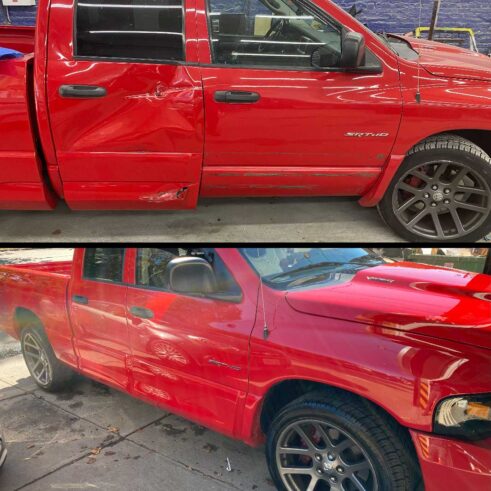
After structural concerns are addressed, the visible body work begins. This may include repairing dents, replacing damaged panels, fixing bumper covers, aligning doors, repairing fenders, and preparing the vehicle for refinishing.
Not every dent requires the same method. Some dents can be repaired with paintless dent repair if the paint is still intact and the dent is accessible. Other damage may require traditional body repair, sanding, filling, priming, and repainting.
The goal is not just to make the damage disappear from a distance. The goal is to restore the panel shape, fit, and finish correctly.
Step 8: Paint Prep and Color Matching
Paint work is one of the most important parts of collision repair. Even a strong repair can look bad if the color does not match.
Modern vehicles often use layered paint systems, metallics, pearls, and clear coats. A proper color match may involve using the vehicle’s paint code, checking paint variants, preparing test panels, tinting, blending into nearby panels, and matching the existing finish as closely as possible.
This matters especially in Newark because many vehicles are parked outside, driven daily, and exposed to sun, road grime, winter conditions, and normal paint aging. The paint on a three-year-old vehicle may not look exactly like the original factory formula anymore, so experience matters.
Step 9: Reassembly
After paint and refinishing, the vehicle is reassembled. Trim pieces, lights, bumper parts, moldings, emblems, liners, clips, and other components are put back into place.
This step needs patience. Loose clips, uneven gaps, poorly aligned panels, or rushed reassembly can make the repair feel unfinished.
A quality repair should look clean up close, not only in photos.
Step 10: Final Quality Check
Before the vehicle is returned, the shop should inspect the repair. This may include checking the paint finish, panel gaps, lights, warning indicators, door operation, trunk or hood alignment, and overall appearance.
The vehicle should be reviewed before delivery so any issues can be corrected before you pick it up.
How Long Does Collision Repair Take?
The timeline depends on the damage, insurance approval, parts availability, hidden damage, and paint work. A small bumper repair may be faster. A larger accident with frame damage, suspension damage, or multiple panels may take longer.
The best move is to ask for an estimated timeline after the vehicle has been inspected. If more hidden damage is found, the timeline may change.
Why Choosing the Right Newark Body Shop Matters
Collision repair is not the place to gamble on the cheapest shortcut. Your car needs to look right, drive right, and be repaired with the right process.
Golden Touch Auto Body helps Newark drivers with collision repairs, insurance claims, towing, dent removal, frame straightening, bumper repairs, paint matching, and more.
Need Help After an Accident in Newark?
If your vehicle was damaged in an accident, bring it to Golden Touch Auto Body for a repair inspection and guidance through the next steps.
Call Golden Touch Auto Body at 973-483-2640 or visit us at 402 Broadway, Newark, NJ 07104.
 English
  Español