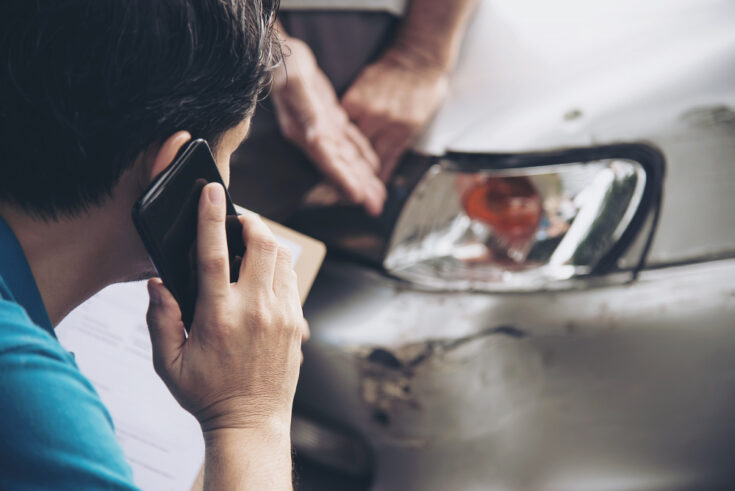
Getting into a car accident in Newark can be stressful, confusing, and frustrating. Whether it happens on McCarter Highway, Bloomfield Avenue, Broadway, Route 21, I-280, near Downtown Newark, the Ironbound, North Newark, or anywhere else in Essex County, the steps you take right after the accident can make a big difference.
You may be dealing with vehicle damage, insurance questions, towing, police reports, and not knowing where to take your car. The most important thing is to stay calm, make sure everyone is safe, and document everything clearly.
Here is what to do after a car accident in Newark, NJ.
1. Check for Injuries and Move to Safety If Possible
The first priority is safety.
Check yourself, your passengers, and anyone else involved in the accident. If someone is hurt, call 911 right away. Do not try to move anyone who appears seriously injured unless there is an immediate danger, such as fire, smoke, or oncoming traffic.
If the accident is minor and your vehicle can be moved safely, try to move it out of traffic. Newark has many busy roads and intersections, and leaving damaged vehicles in active traffic can create another dangerous situation.
Turn on your hazard lights and stay in a safe area while you wait for help.
2. Call the Police If Needed
You should call the police if there are injuries, major vehicle damage, a hit-and-run, a disagreement about what happened, a driver without insurance, or if the vehicles cannot be safely driven.
Even if the accident seems minor, a police report can be useful when dealing with your insurance company. The report may include important details such as the location, drivers involved, vehicle information, and the officer’s notes.
In New Jersey, accidents involving injury, death, or property damage over a certain amount generally need to be reported. If you are unsure, it is safer to contact the police and let them guide you.
For accidents in Newark, the responding agency may depend on where the crash happened. Accidents on local roads may involve Newark Police, while crashes on highways or certain state roads may involve other agencies.
3. Take Photos and Videos of the Accident Scene
Before vehicles are moved, if it is safe to do so, take clear photos and videos of the scene.
Try to capture:
- Damage to all vehicles
- License plates
- The accident location
- Street signs or nearby landmarks
- Traffic lights or stop signs
- Skid marks or debris
- Weather and road conditions
- Any visible injuries
- Insurance cards and driver’s licenses, if shared
Do not rely on memory. After an accident, details can become blurry fast. Photos can help protect you if there is confusion later with the insurance company, the other driver, or the repair estimate.
4. Exchange Information With the Other Driver
Exchange information with the other driver before leaving the scene.
Get the other driver’s:
- Full name
- Phone number
- Address
- Driver’s license information
- Insurance company
- Policy number
- Vehicle make, model, and color
- License plate number
Also write down the date, time, and exact location of the accident. If there are witnesses nearby, ask for their name and phone number too.
Do not argue about fault at the scene. Keep the conversation simple. Get the information you need and let the police report, insurance companies, and repair professionals handle the rest.
5. Contact Your Insurance Company
Once everyone is safe and you have the necessary information, contact your insurance company to report the accident.
When you call, they may ask for:
- Your policy information
- Date and time of the accident
- Location of the accident
- Description of what happened
- Police report number, if available
- Photos of the damage
- Other driver’s information
- Where the vehicle is located
Be honest and clear, but avoid guessing. If you do not know something, say that you do not know yet.
6. Get a Claim Number
After you report the accident, ask your insurance company for a claim number.
This is important.
Your claim number helps the repair shop communicate with the insurance company about the damage, estimate, approvals, supplements, and payment process. Without a claim number, the repair process can slow down.
Write the claim number down and keep it somewhere easy to find. You may need it when speaking with your insurance adjuster, the body shop, rental car company, or towing provider.
7. Remember: You Can Choose Your Own Body Shop
One of the biggest mistakes drivers make after an accident is thinking they must use the repair shop suggested by the insurance company.
You have the right to choose the body shop you trust.
Your insurance company may recommend a preferred shop, but that does not mean you are required to go there. The most important thing is choosing a licensed, experienced auto body shop that can properly inspect the damage, communicate with the insurance company, and repair your vehicle correctly.
This matters because accident damage is not always visible from the outside. A bumper may look slightly damaged, but there may be hidden damage behind it. A proper inspection can reveal issues with the frame, suspension, sensors, paint, panels, and safety systems.
8. Choose a Licensed Newark Auto Body Shop
After a car accident in Newark, choose a shop that understands collision repair, insurance claims, towing, estimates, and the local repair process.
Golden Touch Auto Body is located at 402 Broadway in Newark, NJ and has been serving drivers since 1993. The shop handles collision repairs, frame straightening, bumper and fender repairs, dent removal, paint matching, insurance claims, towing service, rental car assistance, and communication with claim adjusters.
If your vehicle is damaged and you are not sure what to do next, Golden Touch can help guide you through the repair process.
9. Ask About Towing If Your Car Is Not Safe to Drive
Do not drive your vehicle if it feels unsafe.
After an accident, your car may have damage that affects steering, braking, alignment, lights, tires, suspension, or safety sensors. Even if the car starts, that does not always mean it is safe to drive.
If your vehicle cannot be driven or you are not comfortable driving it, ask about towing. Golden Touch Auto Body can help with towing and getting your vehicle to the shop for inspection and repair.
This is especially helpful if the accident happens in a busy part of Newark and you need the vehicle moved quickly.
10. Let the Body Shop Help With Insurance Communication
Insurance claims can be frustrating, especially if you have never been through the process before.
A good body shop can help explain what the insurance company needs, document the damage, prepare the estimate, and communicate with the adjuster. If additional hidden damage is found after the vehicle is taken apart, the shop may need to submit a supplement to the insurance company for additional approval.
That is normal in collision repair.
Golden Touch Auto Body works with insurance claims and can help communicate with claim adjusters so the repair process is clearer and easier for you.
Common Mistakes to Avoid After a Car Accident
After an accident, avoid these mistakes:
- Leaving the scene too quickly
- Not calling the police when needed
- Forgetting to take photos
- Not getting the other driver’s insurance information
- Admitting fault before all facts are known
- Driving a damaged vehicle that may not be safe
- Waiting too long to contact insurance
- Starting repairs before the insurance inspection
- Assuming you must use the insurance company’s preferred shop
- Choosing a body shop only because it is the cheapest option
The goal is not just to make the car look good again. The goal is to make sure it is repaired properly and safely.
What If the Accident Was Not Your Fault?
Even if the accident was not your fault, you still need to document everything, contact insurance, and choose a repair shop.
Depending on the situation, you may be dealing with your own insurance company, the other driver’s insurance company, or both. You may also need a claim number, police report, estimate, photos, and vehicle inspection.
Golden Touch Auto Body can help you understand what information is needed for the repair side of the claim and help communicate with the insurance company during the repair process.
What If the Damage Looks Minor?
Do not ignore minor-looking damage.
Modern vehicles are built with sensors, cameras, brackets, energy absorbers, plastic covers, aluminum parts, and structural components that may be affected during a collision. A small bumper hit can sometimes hide more serious damage underneath.
Before you assume it is “just a scratch,” have the vehicle inspected by a licensed auto body shop.
 Español
  English